 guy
guy Modern home decor transforms spaces through clean lines, functional furniture, and a carefully curated mix of textures that create visual interest without clutter. The approach centers on simplicity and purpose: each piece should earn its place through beauty, utility, or both. You’ll want to focus on neutral color palettes punctuated with bold accents, open floor plans that maximize natural light, and statement pieces that anchor a room without overwhelming it.
Getting started is simpler than you might think. The key is selecting a few strong ideas that match your lifestyle rather than attempting a complete overhaul. Modern design works across any budget because it values thoughtful editing over abundance. A single sculptural chair or a gallery wall of black-framed prints often makes more impact than filling every corner.
The 12 ideas ahead range from quick weekend updates to more involved projects, each with practical advice on materials, placement, and styling. You’ll find options for every room, whether you’re working with a compact apartment or a spacious house. Some suggestions take an hour and minimal investment, while others require planning and a bit more budget. What matters is choosing pieces and finishes that speak to you while maintaining the uncluttered aesthetic modern decor is known for.
What Makes Home Decor Truly Modern
Modern home decor isn’t just about following the latest trends, it’s a deliberate design philosophy centered on simplicity, purpose, and visual clarity. Understanding what qualifies as genuinely modern helps you make intentional choices rather than collecting random contemporary pieces that don’t work together.
At its core, modern design emphasizes function and form working in harmony. Every element should serve a purpose, whether practical or aesthetic, without unnecessary ornamentation. The defining characteristics include:
- Minimalist approach that eliminates clutter and focuses on essentials
- Functional design where beauty and utility coexist seamlessly
- Clean geometric lines and simple silhouettes in furniture and architecture
- Neutral base colors (whites, grays, beiges) punctuated with intentional bold accents
- Quality over quantity, investing in fewer but better-made pieces
- Integration of technology that enhances living without dominating the aesthetic
Natural materials like wood, stone, and metal play a crucial role, adding warmth and texture that prevent modern spaces from feeling sterile. The palette typically stays understated, think soft grays and warm whites, but allows for strategic pops of color through artwork or a single statement piece.
What sets modern apart from simply “new” is this disciplined restraint. It’s not about having the newest gadgets or trendiest colors, but about creating spaces that feel open, calm, and purposefully designed. When evaluating decor ideas, ask whether they simplify your space, serve a clear function, and maintain visual harmony with clean lines and thoughtful material choices.
12 Modern Home Decor Ideas to Implement Now
1. Embrace Minimalist Color Palettes
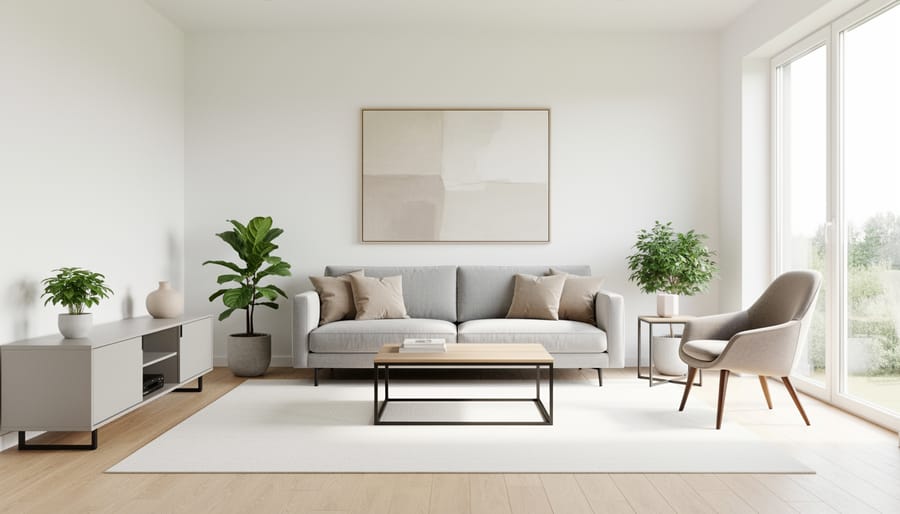
A minimalist color palette forms the foundation of modern home decor, centered on whites, grays, beiges, and soft taupes that create a calm, uncluttered backdrop. Start with a neutral base on walls, consider warm whites like Benjamin Moore’s Swiss Coffee or Sherwin-Williams’ Accessible Beige rather than stark, cool whites that can feel clinical. These warmer neutrals provide depth while maintaining the clean aesthetic modern design demands.
Once you’ve established your neutral foundation, introduce one or two accent colors sparingly. Deep charcoal, navy blue, or forest green work beautifully for throw pillows, a single accent chair, or artwork. The key is restraint: a single burnt orange cushion on a light gray sofa creates more impact than scattering color throughout the room.
To avoid that sterile feeling many fear with minimalist palettes, layer different shades of your neutral. Pair a light gray wall with medium gray furniture and darker gray textiles, this tonal variation adds richness without breaking the cohesive look. Natural wood tones in furniture or flooring also warm the space considerably while staying true to modern principles.
2. Incorporate Natural Materials and Textures
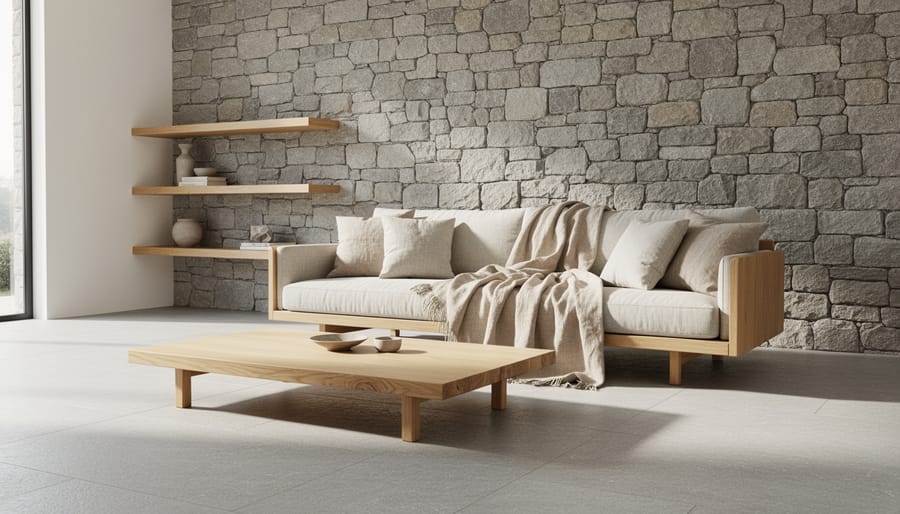
Natural materials anchor modern spaces with organic warmth that prevents minimalist designs from feeling sterile. Wood brings the most versatility, light oak floors create airiness, while walnut dining tables or credenzas add rich contrast against white walls. Look for furniture with visible grain patterns and natural finishes rather than heavily stained pieces.
Stone and concrete introduce textural depth through coffee tables with marble tops, concrete planters, or slate accent walls. These materials work best as focal points rather than overwhelming entire rooms. A single concrete fireplace surround or stone backsplash provides impact without heaviness.
Metal elements in brushed brass, matte black, or stainless steel appear in bar stools, shelving brackets, and picture frames. Mix metals intentionally, pairing warm brass cabinet pulls with cool steel appliances creates visual interest while maintaining cohesion.
Layer these materials thoughtfully: a wood console table topped with a stone sculpture and metal lamp combines three textures without clutter. The key is letting each material’s inherent beauty show through simple forms rather than ornate designs. Natural materials also age gracefully, developing patinas and character that enhance rather than diminish modern spaces over time.
3. Choose Statement Lighting Fixtures
Lighting in modern spaces does far more than illuminate, it defines mood, creates focal points, and functions as sculptural art. A well-chosen fixture can anchor an entire room’s aesthetic while providing the practical light you need.
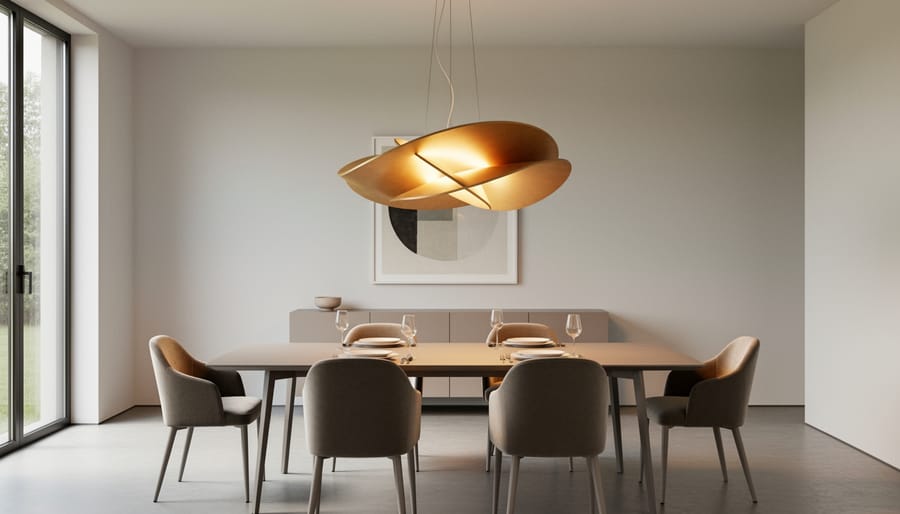
Modern pendant lights work beautifully over kitchen islands or dining tables, where geometric shapes, matte black finishes, or brushed brass details make a statement without overwhelming the space. Look for fixtures with clean lines and interesting negative space, globe pendants, linear chandeliers, or cone-shaped designs all fit the modern aesthetic. The key is choosing fixtures that feel intentional rather than generic.
Sculptural floor lamps serve double duty in living rooms and bedrooms, providing task lighting while adding vertical interest. Arched floor lamps with marble bases, tripod designs with adjustable arms, or minimalist torchiere styles complement modern furniture without competing for attention. Position them beside seating areas or in corners that need visual weight.
Architectural lighting, think recessed fixtures, LED strip lights under cabinets, or track lighting, enhances the clean lines modern design demands. These solutions illuminate without cluttering sightlines, maintaining the uncluttered feel that makes modern spaces work.
When selecting fixtures, consider scale carefully. Oversized pendants can handle high ceilings, while smaller spaces benefit from streamlined designs that don’t visually crowd the room.
4. Opt for Clean-Lined Furniture
Furniture shapes the entire feel of a modern space, and the defining characteristic is simplicity. Look for pieces with straight edges, uncomplicated silhouettes, and geometric forms rather than ornate detailing or curved embellishments. A low-profile sectional with square armrests and exposed legs creates visual breathing room, while a platform bed eliminates the need for a bulky box spring and sits closer to the ground for that signature modern look.
Storage solutions should disappear into the design rather than announce themselves. Choose credenzas and media consoles with smooth, handleless fronts, or sideboards with recessed pulls that maintain clean horizontal lines. Materials matter here: solid wood in walnut or oak brings warmth, while lacquered finishes in white, black, or gray emphasize the streamlined aesthetic. Avoid anything with excessive hardware, turned legs, or decorative molding.
The trick is balancing visual lightness with actual comfort. Furniture can look modern without sacrificing function. Test seating depth and cushion firmness before buying, and remember that exposed legs make rooms feel more spacious than skirted pieces that reach the floor.
5. Add Geometric Patterns Strategically
Geometric patterns inject visual interest and modern sophistication into your space, but the key is restraint. Start with one dominant geometric element, maybe a bold chevron rug anchoring your living room, then layer in subtler patterns through throw pillows or a single piece of wall art. Choose patterns in a cohesive color family to maintain harmony rather than creating visual chaos.
When mixing geometrics, vary the scale dramatically. Pair large-scale hexagons on a rug with small-scale triangular prints on cushions, ensuring at least one solid color appears throughout to give the eye a resting place. Stick to two or three patterns maximum in a single room. Black-and-white geometric prints offer fail-safe versatility, while muted grays and taupes with geometric motifs add dimension without demanding attention.
Wall art provides an easy testing ground, a single large geometric canvas can anchor a room without the commitment of reupholstering furniture. For renters, geometric throw pillows and removable wallpaper accent walls deliver modern impact you can take with you when you move.
6. Integrate Smart Home Technology
Smart home technology has evolved beyond clunky gadgets to become an invisible layer that enhances modern living without cluttering your aesthetic. The key is choosing devices designed with minimalism in mind, sleek thermostats with simple interfaces, recessed LED systems controlled by voice or app, and motorized shades that eliminate visible cords and hardware. Voice-controlled lighting lets you adjust ambiance instantly, from bright task lighting for cooking to warm, dimmed tones for evening relaxation, all without adding wall switches or visible controls. Smart thermostats like those with minimal displays or frameless designs blend into walls rather than dominating them, while learning your schedule to optimize comfort and energy use automatically. Motorized window treatments offer the cleanest look possible: no dangling chains, no manual cranks, just smooth fabric that responds to voice commands or programmed schedules. Install these systems during setup rather than retrofitting later, and choose finishes that match your existing hardware, matte black, brushed nickel, or white, so they disappear into your design rather than announcing themselves as technology.
7. Create Open, Flowing Spaces
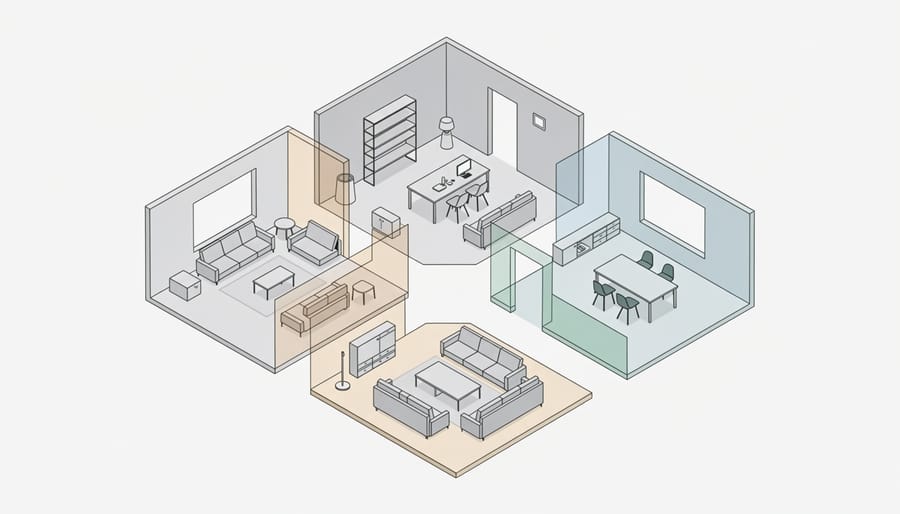
Open floor plans remain a cornerstone of modern design, but achieving true openness without sacrificing functionality requires deliberate planning. Start by removing or minimizing visual barriers, swap bulky bookcases for low-profile consoles, replace heavy curtains with sheer panels or skip window treatments entirely where privacy allows, and keep walls free of clutter that interrupts sightlines.
Use furniture as your zoning tool rather than walls. A sofa floating in the room with its back to the dining area naturally separates living from eating spaces while maintaining flow. Area rugs anchor each zone without blocking movement, and consistent flooring throughout reinforces continuity. When zoning an open plan align furniture pieces with architectural features like columns or beams to create implied boundaries that feel intentional.
For renters, this approach works particularly well since it requires no structural changes. Stick to a unified color palette across zones, varying textures and shapes keeps things interesting without fragmenting the space visually. Avoid pushing all furniture against walls; instead, create conversation clusters that guide movement through the room while leaving generous walkways between defined areas.
8. Display Curated Art and Decor
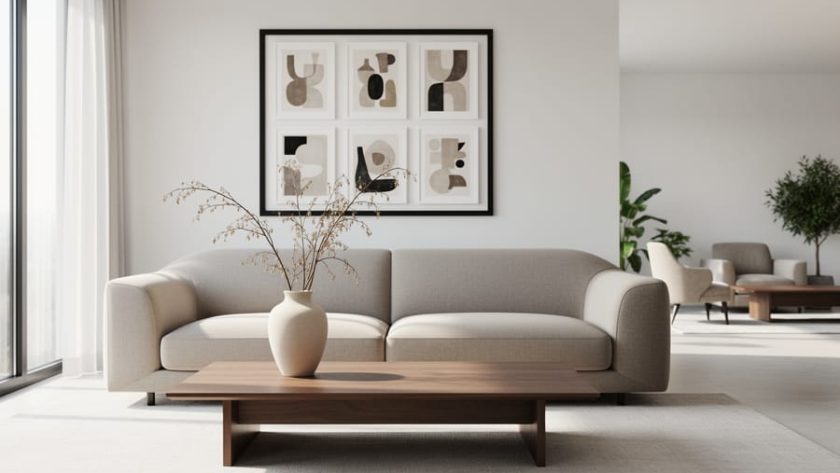
Modern spaces thrive on intention, not abundance. Select a few meaningful pieces that resonate with you rather than filling every wall and surface. A single large-scale abstract painting above a sofa creates more impact than a dozen small prints scattered around the room. Choose artwork with clean lines, bold colors, or geometric forms that echo your modern aesthetic, think monochromatic photography, minimalist line drawings, or contemporary sculptures in metal or stone.
For gallery walls in modern homes, maintain strict alignment and consistent spacing. Use identical frames in black, white, or natural wood to create cohesion, and limit your collection to three to five pieces maximum. Arrange them in a grid pattern rather than an organic cluster for a cleaner look. Alternatively, lean one oversized piece against the wall on a console table or floating shelf for an effortlessly modern vibe that’s also renter-friendly.
Statement sculptures work beautifully on side tables, shelving, or pedestals, just resist the urge to crowd them with other objects. Give each piece breathing room. The negative space around your decor is just as important as the items themselves, allowing the eye to rest and each piece to command attention.
9. Use Reflective and Glossy Surfaces
Reflective and glossy surfaces work like visual multipliers in modern spaces, bouncing light around rooms and making them feel significantly larger. A well-placed oversized mirror opposite a window can double the perceived natural light while adding architectural interest. Glass coffee tables disappear visually, preventing furniture from feeling heavy or cluttered in open-concept layouts.
High-gloss finishes on lacquered cabinets, polished concrete floors, or glazed ceramic vases catch and reflect ambient light throughout the day, creating subtle shifts in how a room feels. Chrome and brushed nickel hardware amplifies this effect on a smaller scale. The key is balance, too many reflective surfaces can make a space feel cold or echo-prone, so pair them with matte textiles and natural wood.
Maintenance matters with these choices. Glass requires regular cleaning to avoid fingerprints and smudges, especially on coffee tables in high-traffic areas. High-gloss painted surfaces show dust more readily than matte finishes, so keep microfiber cloths handy. Mirrors need occasional deep cleaning with streak-free solutions. Despite the upkeep, the spatial and light benefits make reflective elements worthwhile investments in modern design schemes.
10. Bring in Indoor Plants
Indoor plants breathe life into modern spaces without compromising clean aesthetics when chosen and displayed thoughtfully. Snake plants and ZZ plants top the list for modern homes, both tolerate low light, need watering only every two to three weeks, and feature architectural forms that complement minimalist design. Monstera delicata and fiddle-leaf figs work beautifully as statement pieces in corners or beside seating areas, their bold leaf shapes adding organic interest without fussy maintenance.
The planter matters as much as the plant itself. Opt for matte ceramic pots in white, black, or concrete gray, or choose sleek metal planters with simple cylindrical or geometric shapes. Avoid ornate patterns or bright colors that compete with your overall palette. For placement, resist the urge to scatter small plants everywhere. Instead, group two or three plants of varying heights on a credenza, position a single large plant as a focal point near a window, or line identical planters along a floating shelf for symmetry. This curated approach brings warmth and texture while maintaining the uncluttered flow that defines modern design.
11. Install Floating Shelves and Concealed Storage
Floating shelves eliminate visual bulk by creating the illusion that storage simply hovers on your walls, no brackets interrupting clean lines. Mount them in living rooms to display a few carefully chosen objects, or use them in kitchens and bathrooms where traditional cabinetry would feel heavy. Choose shelves with hidden mounting systems rather than visible hardware, and space them asymmetrically for a more dynamic look than stacked rows.
Wall-mounted cabinets with push-to-open mechanisms take this concept further by hiding handles entirely. These work especially well flanking a television or above a desk, providing closed storage that doesn’t announce itself. For renters, consider leaning large artwork against the wall to conceal smaller storage bins behind it, or use removable adhesive strips for lightweight floating shelves that won’t damage walls.
Installation requires finding studs or using appropriate wall anchors, drywall alone won’t support much weight. Mark your level line in pencil, drill pilot holes, and always check twice before committing. If you’re mounting glass shelves, use rubber bumpers between the shelf and bracket to prevent slipping and reduce that hollow sound when you set items down.
12. Layer Textures Through Textiles
Modern spaces need textural contrast to feel inviting rather than stark. Layering fabrics introduces tactile warmth without compromising clean lines.
Start with linen curtains in neutral tones, their natural wrinkles and subtle texture soften windows while filtering light beautifully. Choose simple rod pockets or grommets over fussy pleats. For seating areas, drape a chunky knit or wool throw in charcoal, ivory, or camel across a sofa arm rather than folding it perfectly, the casual placement adds lived-in comfort.
Anchor the room with a textured rug that grounds furniture groupings. Look for low-pile wool, jute, or sisal in solid colors or subtle geometric patterns. These materials introduce dimension underfoot without visual clutter.
Stick to a cohesive color palette of two to three shades, letting texture provide the variation. Quality matters here, cheap synthetics pill quickly and lack the depth natural fibers offer. Mix weights and weaves: pair smooth linen with nubby bouclé, or flat cotton with raised chenille. This layered approach transforms a sparse modern room into a space that actually feels like home.
Getting Inspired: Design Shows and Resources
Seeing modern decor in person makes all the difference when you’re trying to visualize how these ideas might work in your own home. Design shows provide hands-on inspiration that online browsing simply can’t match, you can touch materials, see true colors under proper lighting, and get a real sense of scale before committing to purchases.
Events like these let you compare different modern furniture styles side by side, discover emerging trends before they hit mainstream retail, and often speak directly with designers who can answer specific questions about implementing ideas in your space. Beyond major shows, many furniture showrooms and home improvement stores regularly update their displays with modern vignettes that demonstrate how to combine pieces effectively. Local design studios sometimes host open houses or workshops focused on contemporary aesthetics, providing community-level inspiration that feels more accessible than glossy magazine spreads. The key is to attend with your specific needs in mind, take measurements, photos of your current space, and notes on what draws your eye so you can translate that inspiration into actionable next steps at home.
Key Takeaways for Your Modern Decor Journey
Transforming your home with modern decor doesn’t require a complete overhaul or unlimited funds. Start by decluttering and removing items that don’t serve a clear purpose or bring you joy, this single step immediately creates the clean, open feeling that defines modern design. From there, invest strategically in a few quality foundational pieces like a well-crafted sofa or a statement lighting fixture rather than filling your space with disposable items.
Layering is what prevents modern spaces from feeling stark or unwelcoming. Add warmth through natural materials, varied textures in textiles, and carefully selected plants or art. A budget-friendly living room can look thoroughly modern with thoughtful paint choices, decluttered surfaces, and a few well-placed accent pieces. Renters can achieve the same aesthetic with removable updates like floating shelves, area rugs, and statement lighting that don’t require permanent modifications.
Remember that modern design principles work at every price point. You might explore high-end flooring ideas that deliver contemporary looks affordably, or add clean-lined cabinet details to update existing kitchen storage. The twelve ideas in this guide offer multiple entry points, choose one or two that resonate with your space and budget, implement them fully, then build from there as your vision develops.
Common Questions About Modern Home Decor
Is modern decor expensive?
Modern decor doesn’t have to break the bank. You can achieve the look by starting with affordable neutral paint, decluttering existing spaces, and investing in just a few quality pieces rather than filling every corner. Retailers at every price point now offer clean-lined furniture and minimalist accessories.
How is modern different from contemporary?
Modern refers to a specific design movement from the early to mid-20th century, characterized by clean lines, minimal ornamentation, and functional forms. Contemporary, on the other hand, describes what’s current right now and evolves with trends, often incorporating softer edges and more curves than strict modernism.
Can I mix modern with other styles?
Absolutely. Modern pieces work beautifully alongside vintage finds, rustic elements, or bohemian textiles. The key is maintaining visual balance, let modern furniture provide the foundation while accessories and accent pieces bring in warmth from other aesthetics.
What’s the easiest way to start modernizing my space?
Begin by removing clutter and editing down your decorative items to only what you truly love. Then repaint one room in a neutral shade and swap out heavy curtains for simple linen panels. These changes cost little but instantly shift the feel toward modern without requiring furniture purchases.
How do I keep modern spaces from feeling cold?
Layer in natural materials like wood and wool, add soft textiles such as throws and area rugs, and incorporate living plants. Warm metallics like brass or copper also help, as do dimmable lighting options that let you adjust the mood beyond stark overhead fixtures.
These questions reflect what most people wonder when they’re considering a shift toward modern design. The truth is that modern decor is more accessible and flexible than its reputation suggests. You’re not locked into a museum-like aesthetic or an all-or-nothing renovation. Small, thoughtful changes guided by the principles we’ve covered, minimalism, clean lines, natural materials, and intentional choices, will move your space in a modern direction at whatever pace and budget works for you.